Wong Ping’s Fables: Absurdity, Black Humor, and Everyday Life
黄炳的寓言:荒诞、黑色幽默与日常生活
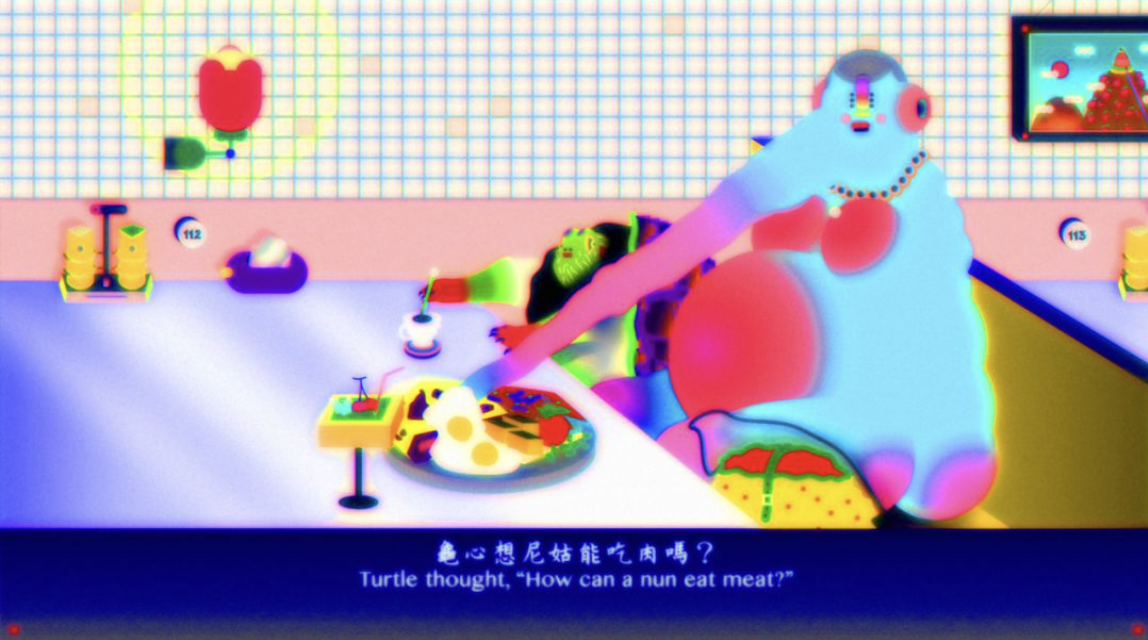
In his animated series Wong Ping’s Fables (2018), the Hong Kong artist turns personal anxieties, social taboos, and mundane encounters into absurd parables—where turtles fall in love with elephants, chickens suffer from Tourette syndrome, and a cockroach on a bus triggers a moral crisis.
Editor’s note
编辑说明
This interview explores Wong Ping’s creative method: how personal diary-like observations, social media culture, sexual language, and political anxiety are transformed into animated narratives that appear playful but carry sharp moral and social critique.
Key questions
核心问题框架
- How does Wong Ping turn personal experiences into absurd animated fables?
- Why does he use sexuality and dark humor as narrative language rather than provocation?
- How does animation soften taboo subjects while sharpening social critique?
Selected excerpts
节选
Wong Ping’s Fables (I) contains three stories, all drawn from my own experiences. The “turtle and elephant” parable came from a single-eyelid friend’s insecurity; the chicken inspector reflects my view on influencers and bullying; and “Ah Tree” grew out of my bus-ride daydreaming after seeing a cockroach crawl out of a pregnant woman’s handbag.
Life is already full of absurdity and darkness—we just get used to ignoring it. What I do is extract those moments and exaggerate them a little.
What this demonstrates
它能证明什么
- Ability to analyze an artist’s creative method through close-reading and interview
- Skill in translating experimental art practices into clear, engaging public narratives
- Editorial judgment in handling taboo, sexuality, and dark humor without sensationalism