Chinese Typewriters: How Chinese Characters Survived the Information Age
中文打字机:信息技术下的汉字突围史
“To preserve Chinese characters in the modern world, radical thinkers had to reimagine technology, writing systems, and the relationship between humans and machines.”
Editor’s note
编辑说明
This piece traces the overlooked history of Chinese typewriters and early input systems, showing how Chinese characters were not obstacles to modern information technology, but catalysts for rethinking writing, classification, and human–machine interaction.
Key questions
核心问题框架
- Why was the Chinese typewriter long considered an “impossible” machine?
- How did engineers, writers, and typists rethink writing when alphabetic keyboards failed?
- What does the history of Chinese input systems reveal about global information technology?
Selected excerpts
文章节选
Excerpt 1: An object history declared nonexistent
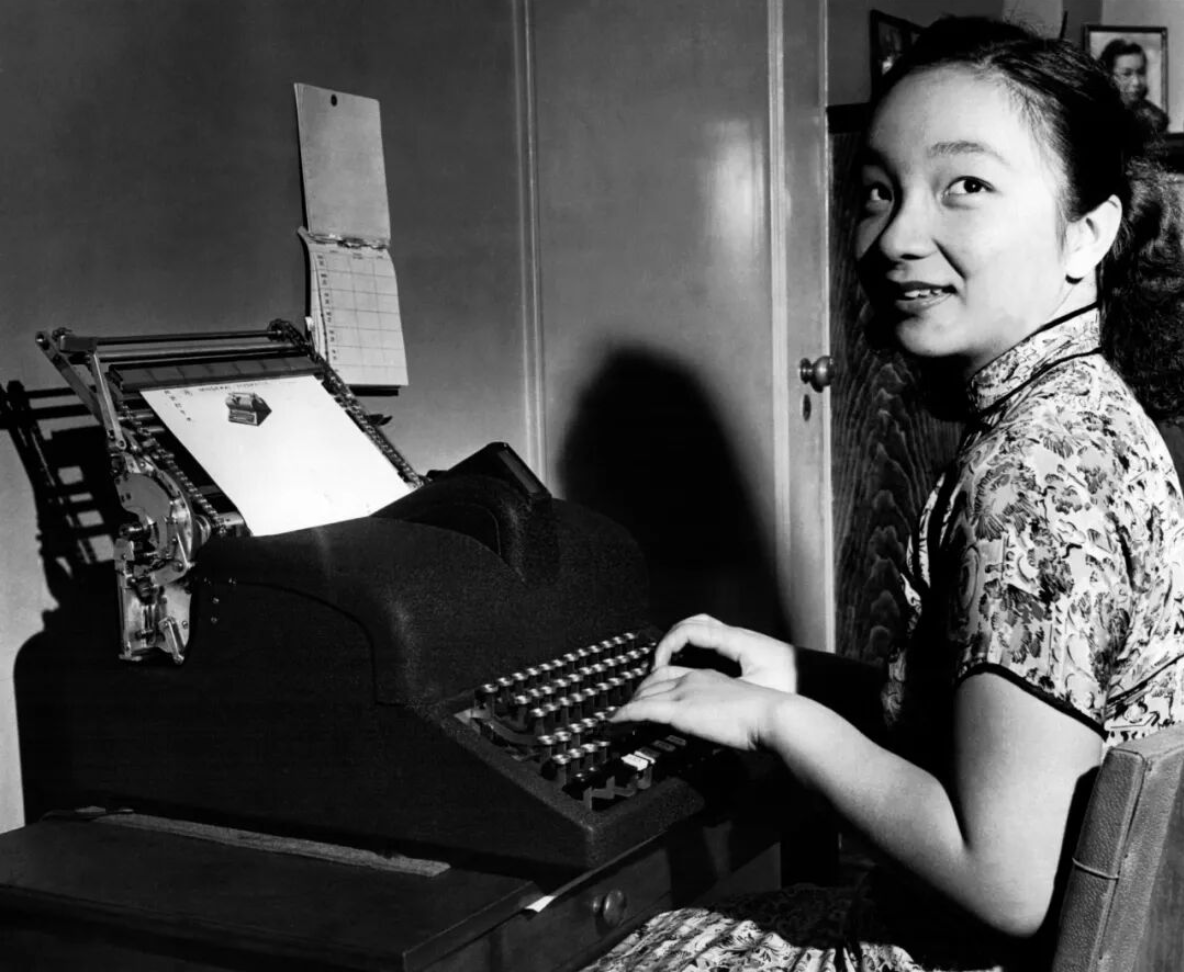
Stanford historian Thomas Mullaney once wandered through Beijing’s Panjiayuan flea market in search of an unlikely object: the Chinese typewriter. “It doesn’t exist” was the response he heard most often. Yet behind this repeated negation, Mullaney sensed a historical silence. The history of the Chinese typewriter had never received the recognition it deserved. Since the early twentieth century, repeated attempts to invent such machines were often ridiculed and taken as symbols of China’s supposedly incurable backwardness.
Excerpt 2: When information technology excluded Chinese characters
While developers and manufacturers of typewriters proclaimed the universality of their machines, they simultaneously ignored Chinese. Chinese characters were excluded from this wave of information technology. To achieve modernization, many believed that writing based on Chinese characters had to be abandoned. Ideas that seem unthinkable today gained support among reformers seeking national survival. Figures such as Chen Duxiu, Qian Xuantong, and Lu Xun all pointed to Chinese characters as the source of backwardness, even issuing radical claims that “if Chinese characters do not die out, China will perish.”
Excerpt 3: Writing as search — the birth of Chinese input
By the 1930s, while others were still debating libraries, catalogs, and phone books, Lin Yutang shifted the problem into writing itself. He created a fundamentally new mode of writing for Chinese: writing through searching rather than inscribing. The same logic applies today. When using Sogou Pinyin or any other Chinese input method, each keystroke is not an act of writing but of searching. Once the character is found, it appears on the screen. In this sense, Lin Yutang’s experiment was the first Chinese input method.
What this demonstrates
它能证明什么
- Technology history beyond Western standards: showing how non-alphabetic writing systems reshaped global information technology.
- Writing as interaction design: redefining typing as search, prediction, and selection.
- Continuity through change: how Chinese characters survived modernity by transforming themselves.